
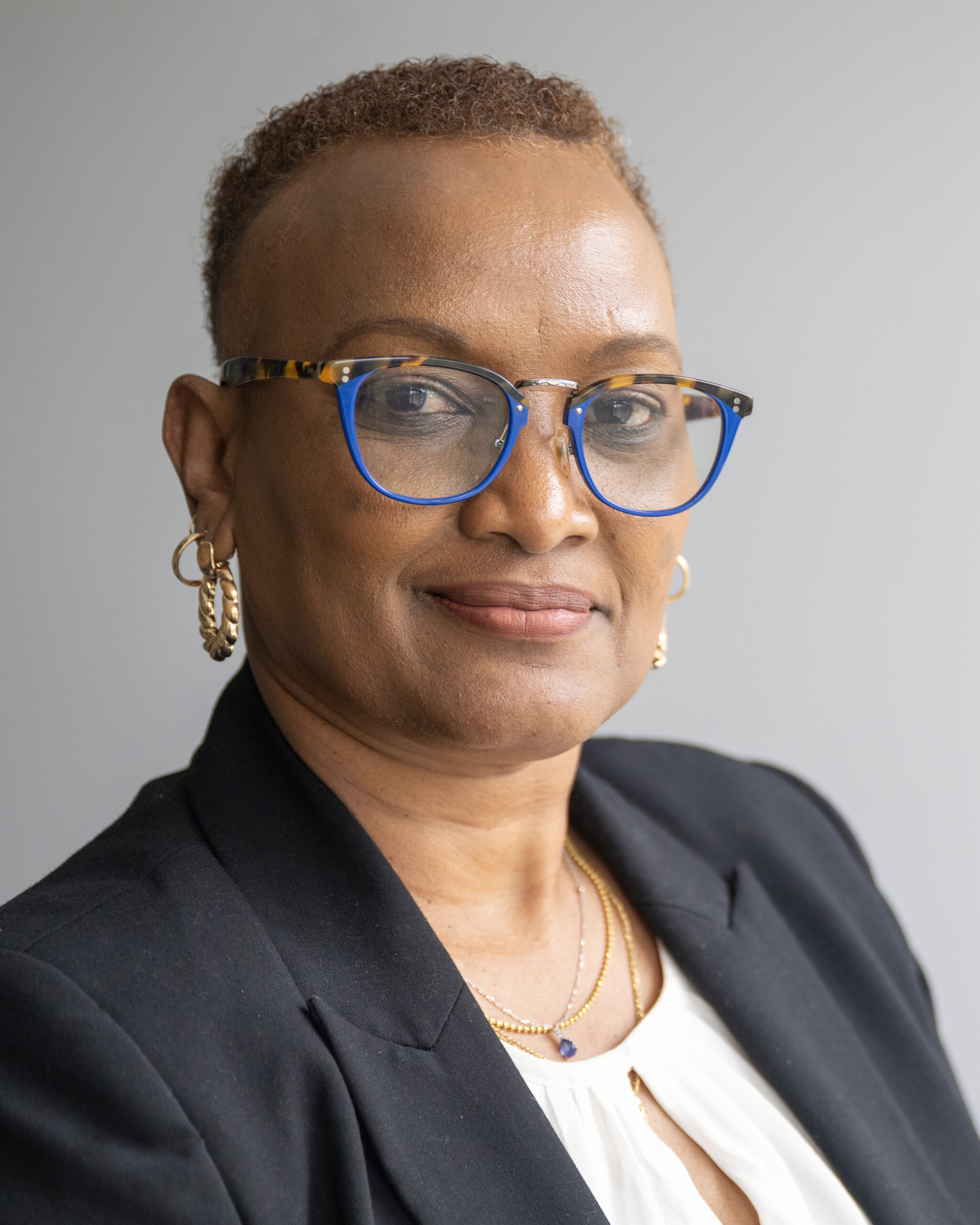

Kenyan born and trained physician, Dr. Doris Macharia was in February last year appointed global president of Elizabeth Glaser Pediatric AIDS Foundation (EGPAF) one of the biggest Kenya government’s supporters on pediatric HIV care and prevention. The appointment made her the first non-American and first African woman to lead the foundation. Her profile in global health expanded in February this year when she was appointed a director of the TB Alliance board, a non-profit organization committed to developing better and faster and affordable treatment for tuberculosis, following her election as president of the alliance’s Global TB Stakeholders Group.
She was in Nairobi recently to speak at the World Health Summit held on 27-29 April 2026. Writer Gitahi Ngunyi sat down with her on the sidelines of the summit for a discussion on the ongoing funding disruptions currently facing global fight against pediatric HIV.
Excerpts
You were appointed the first EGPAF non-American and first African president at a very challenging time for global health. How does that feel and how do you plan to crack the challenge of shrinking funding?
I go back to the maxim that it is always a privilege to do this. Because I don’t have all the answers. See here I am. I have all this experience I have gathered over time. But the answers to this challenge of disruptions and shifting funding landscapes in public health – who could have experienced that? However, I am depending on three things to navigate the challenges. First, my owned lived experience is helping me to navigate this challenging environment. In this challenge, it doesn’t matter whether you are Africa or any other nationality. But may be its good that I am African because I can remember all the things I did in the past to get out of difficult situations. So I have the lived experience to bring to the job.
The other thing is how I can get more mission focused. At EGPAF we have a mission to end pedriatric AIDS and HIV infections which is not yet accomplished. So the question I am constantly asking myself is – what else do we need to do?
Lastly, understanding that no one has an answer in such challenging time has also helped me. I have to lead with empathy. I must admit that it is very hard and the end looks very difficult. It looks far, but it is still visible.
How does that end look like?
We have seen the huge gains over the last 25 years such as the 80 percent drop in pediatric HIV deaths and infections. The remaining 20 percent is what we call the “last mile.” This 20 percent is what I see as visible but it is going to be the most difficult. The funding disruptions and shifting donor priorities make it more difficult. But the end is there and it is in sight.
Yes, I came in at a very difficult time. But when has it ever been easy to be a CEO? The job must be done – with people and the right mission at hand. I look at Kenya and other countries where EGPAF is working and the need still exists. We therefore cannot sit and begin licking our wounds.
You sound very optimistic but there is the reality of foreign assistance decisions that have been made by US president Trump that clearly put all the work on HIV that has been done over the last 25 years in danger
I have to be an optimist but at the same realistic. I have to be optimistic because there are people on our communities depending on me. How can I just sit and lament when you have high mother to child transmission rate of 9 percent like the case in Kenya? Yes it is tough. But we have to look for alternatives. We have to ask ourselves how we partner with governments going forward. It has to be different. We can no longer be this huge implementer delivering huge programs. Secondly, donors have shifted. There is less money. So, how then do we approach them with the mission? We have to be realtistic because the organization we were two years ago is no longer the same. Our revenues have much decreased. Yet the problem is still there. What then must we do with the funding that we have?
What will EGPAF priorities with regards for Kenya be under your leadership?
Kenya is close to my heart because it is my country. In terms of priorities, eliminating mother to child transmission is biggest priority. The biggest priority is addressing the drivers of mother to child transmission and new infections among children. When you look at Kenya mother to child transmission, also known as vertical transmission is not optimal at 9 per cent. If you want to eliminate mother to child transmission it has to fall below 1 percent like Botswana. The second priority is bringing down the number of new infections for children. The third priority is HIV free-survival.
We must also make sure that we have digital tracking tools. We have done this in other countries such as Malawi , Mozambique and Tanzania where mother and baby are tracked together. That helps because you can know where the mother or the baby are at any particular time. It also helps because when you are dropping out of ART, we know where you are. And when are mothers dropping out anyway? Lastly, it is early infant diagnosis. Kenya’s early infant diagnosis is between 70-80 percent which is very low.
Clearly, the funding shock means that countries like Kenya must looking more inwardly for resources to fight HIV. What budget line must the government ring fence to ensure that the goal of ending children HIV infection and AIDS by 2030 is achieved?
It’s a question we always ask ourselves at EGPAF. Whose problem are we trying to solve? It’s a community problem. And last year was a difficult year because some of our funding got cut. That is the truth. But now that Kenya has signed the government to government health partnership MOU with US which is about US$2.5 billion over five years, there is a commitment to co-finance the areas of HIV, Malaria and TB. So there is going to be a problem and there will be money. The question for EGPAF is how are now going to partner with MoH. We will engage with the ministry to find out what data is telling us about the need is.
US government’s Office of Management and Budget (OMB) 25 percent cut on foreign assistance has put your work in Kenya and other countries in real danger. What do you plan to cut from your support to Kenya if the funding pressure proves to be too much?
It is very hard to say whether it is drugs, or testing that we will cut because at the end of the day, we are in Kenya to serve the community. And we are here to partner with government. But then we know the partnerships have changed and they might not need everything as they used to need. That is the pragmatic way we will look at it because we can’t begin to think about cutting support on drugs. I have been looking at the data for kids and I see less testing, less being put on treatment because of the challenges we have faced in the last two years.
The fact that EGPAF was 80 percent funded by PEPFAR turned out to be a weak point. Yet the work you do is very important in Africa where public health funding is a major challenge. What plans do you have to diversify your income sources?
We are talking to other people. I don’t want to mention names but we are in discussions with foundations and individual philanthropists. The US government is still a big supporter for HIV work. And it still a big support because it is still a big supporter of the Global Fund for HIV. Through PEPFAR there were great achievements. But now we have to think about other donors who can also retreat as we have seen some governments in Europe already doing. So what we are doing is building a completely new non-western portfolio.